 May 26, 2026
 8 min
8 min
History of the Keyboard: A Technical Object That Became a Cultural Standard
The keyboard was not invented in one step. It emerged through successive phases: writing machines, industrial production, operator training, and later computing. At each stage, technical constraints and human habits reinforced each other. That is why QWERTY became both an engineering solution and a long-lasting social convention.
From Early Writing Machines to Industrial Typewriters
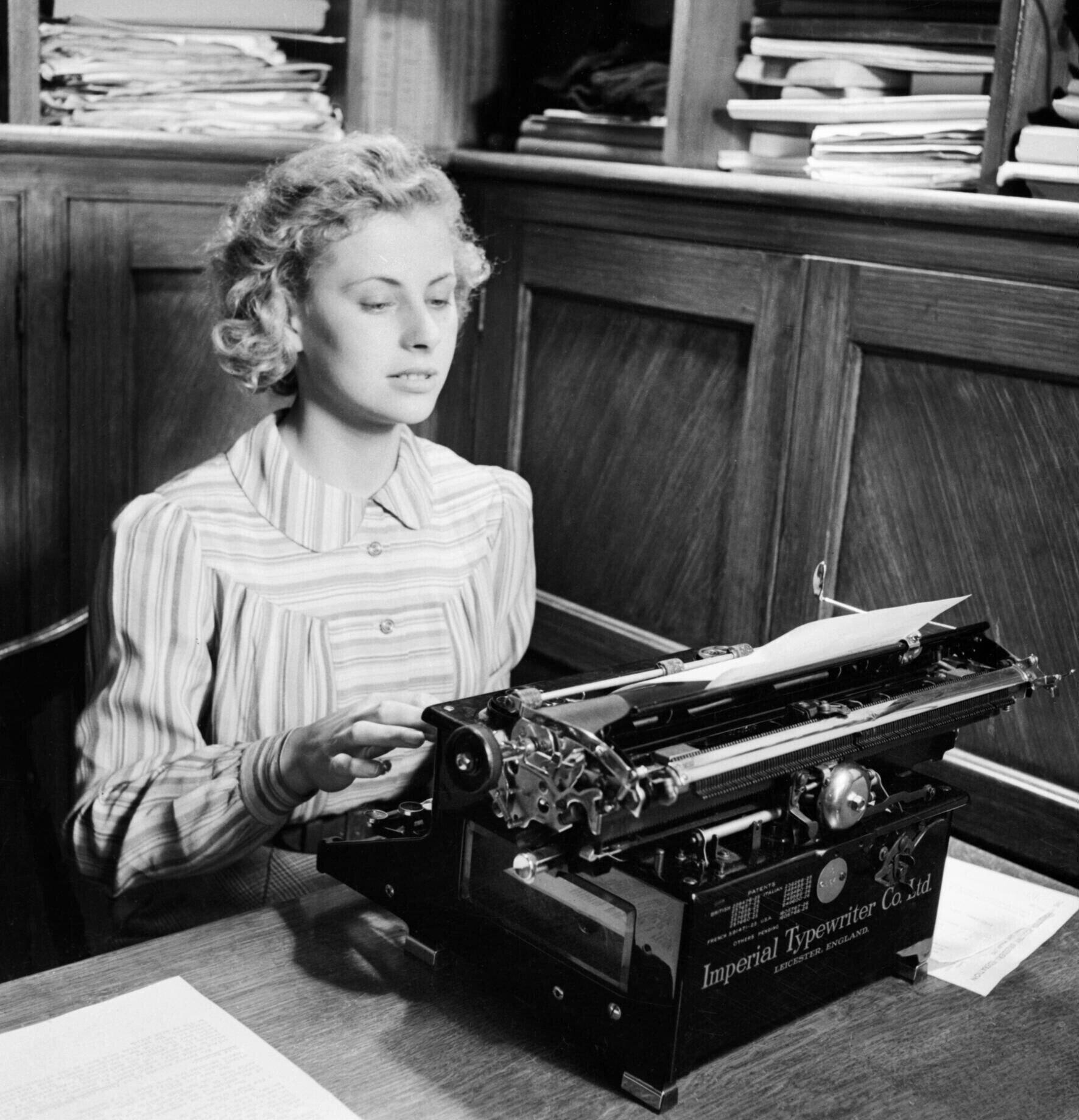
Patents for writing machines appeared as early as the 18th century, but acceleration came in the 19th century when manufacturing became more reliable and scalable. Administrative and commercial work needed documents that were faster to produce, easier to read, and more uniform.
By the late 1860s, more mature prototypes emerged, followed by broader industrial adoption. A commonly cited milestone is the commercial spread of Remington-type machines in the 1870s. At that point, the keyboard was mainly a mechanical interface: key placement had to balance manufacturing limits, legibility, and reliability.
The Rise of QWERTY: Mechanical Constraints, Iteration, and Trade-Offs
The QWERTY layout spread with the typewriter era. It is often said that QWERTY was designed to slow typists down, but the historical picture is more nuanced.
- On mechanical machines, some letter sequences could jam the mechanism. Spacing frequently paired letters could reduce mechanical collisions.
- QWERTY became dominant mainly because it was manufactured at scale and then taught widely. Once learning systems and habits were established, the standard reinforced itself.
Hand alternation can improve typing flow, but QWERTY is mostly the result of historical compromise rather than a pure scientific optimization. It may not be globally optimal by modern ergonomic criteria, but it remains highly compatible with the broader ecosystem.
Home Row Logic and Dvorak: Optimization for English (1930s)
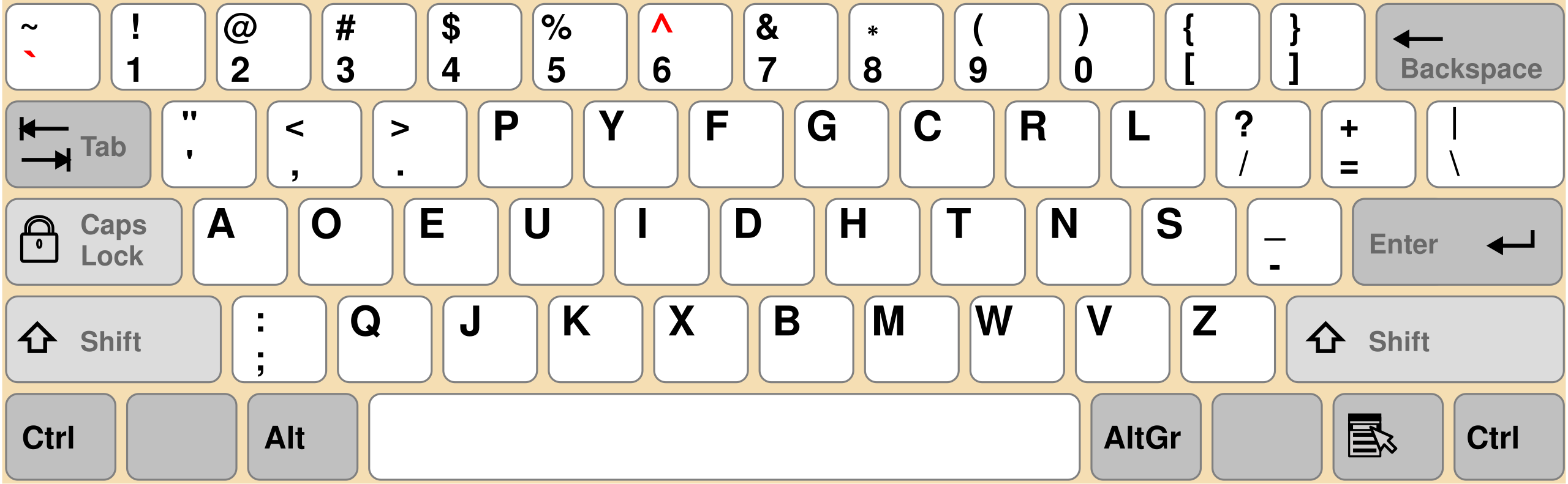
A core concept in touch typing is the home row. These are the reference keys where fingers return between keystrokes (typically F and J in QWERTY). The objective is to minimize finger travel and stabilize positioning.
This is central to Dvorak (DSK), proposed by August Dvorak and William Dealey. It is commonly presented as an attempt to place high-frequency letters on the home row and distribute effort more efficiently, based on English language patterns. The layout was completed in 1932, with a patent filed in 1936.
Some sources report modest speed gains for certain typists, often around 5 to 10%, but outcomes depend heavily on training context and relearning costs.
Standardization and Training: Why Layouts Persist
By the late 19th and early 20th centuries, offices became more structured. Typewriters were production tools, and typing schools turned specific layouts into transferable skills.
This point matters: key layout is only part of adoption. Large-scale diffusion also depends on training institutions, employers, and manufacturer support. A technically better layout can remain niche if the ecosystem does not move with it.
From Electric Keyboards to Computer Input (Mid-20th Century)
As computing expanded, the keyboard shifted from striking paper to sending encoded input.
Two major milestones:
- 1963: ASCII was published, shaping how symbols were represented in software systems.
- 1991: Unicode was published, enabling much broader language coverage.
These standards do not fix key positions directly, but they define the digital layer that keyboards feed into.
PC Keyboards, Laptops, and Mobile (1980s to Today)
With personal computing, hardware formats standardized again: function keys, navigation clusters, numeric keypads, and system keys.
A common reference is 101/102-key keyboards (US/ISO), later 104/105 with extra system keys. Counts vary by manufacturer, but the trend is clear: keyboards became interfaces for software workflows, not just text entry.
Then two parallel shifts happened:
- Laptops compressed layouts to fit portability constraints.
- Mobile devices replaced many physical keys with virtual, predictive keyboards.
Despite hardware change, QWERTY remained dominant.
Why QWERTY Still Dominates Despite Alternatives Like Dvorak
Alternative layouts such as Dvorak have existed for decades, yet they remain minority choices. The main reason is network effect:
- The more a layout is taught, the cheaper it is to maintain.
- The more it is used, the more software, shortcuts, and hardware align with it.
- The more compatible it becomes, the lower the incentive to switch.
Keyboard history shows that industrial momentum and cultural adoption can outweigh pure technical optimization.